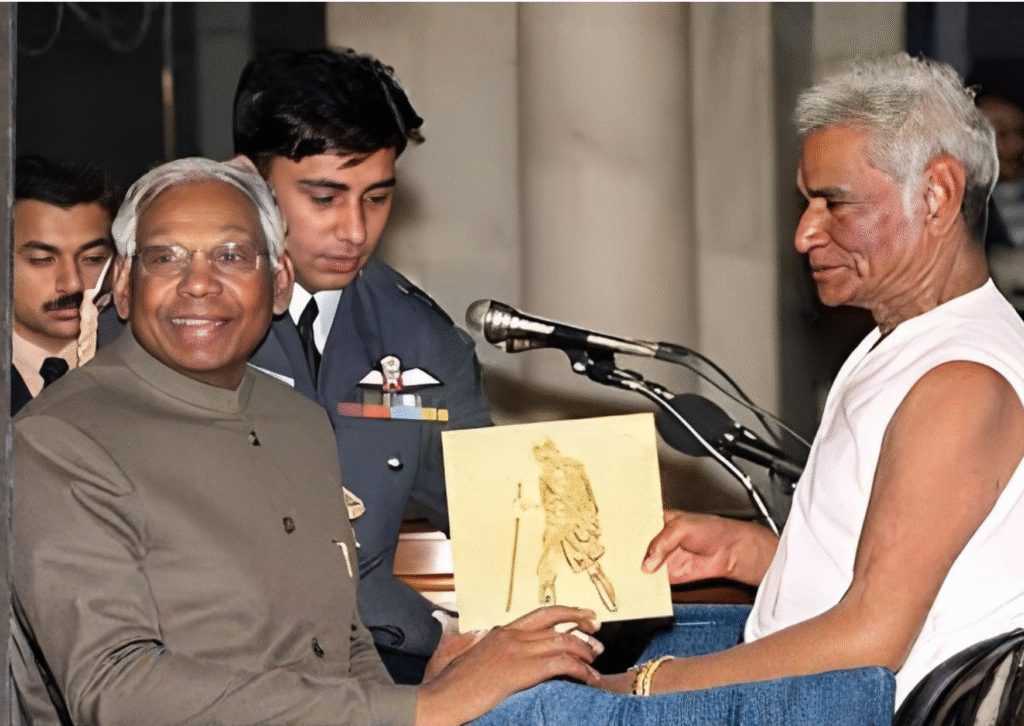
Murlidhar Devidas Amte—known to the world as Baba Amte—was born into comfort. He had education, privilege, and the promise of a successful legal career. Yet his story is remembered not for what he had, but for what he gave up. Baba Amte chose a life where suffering was not avoided, but embraced—so that others might be healed.
Born in 1914 in Maharashtra, Baba Amte grew up in a wealthy family. He studied law, enjoyed fine clothes, music, and debate. For a time, his life followed a predictable path. But fate interrupted him one day when he encountered a man afflicted with leprosy—abandoned, feared, and treated as untouchable. The sight shook him. Society had rejected the man, but Baba Amte could not.
At a time when leprosy was misunderstood and deeply stigmatized, Baba Amte did the unthinkable—he touched the man. Not out of rebellion, but out of compassion. That moment changed everything. He began studying leprosy, learning medicine, and understanding that fear—not disease—was the real enemy.
He soon gave up his legal practice and devoted his life to those society had pushed to the margins. In 1949, he founded Anandwan—the “Forest of Joy”—a rehabilitation center for people affected by leprosy. There were no donations at first, no recognition, no certainty. Just belief. Patients were not treated as victims but as workers, artists, farmers, and human beings with dignity.
Anandwan grew—not as a charity, but as a community. People cured themselves not just medically, but socially. They rebuilt homes, ran schools, created livelihoods. Baba Amte believed that self-reliance was the highest form of healing.
His activism did not stop there. He stood with tribal communities, opposed destructive development projects, and supported movements that protected human dignity and nature. He walked alongside Vinoba Bhave and Jayaprakash Narayan, sharing their belief that change must come from conscience, not coercion.
Baba Amte lived simply, spoke honestly, and worked tirelessly—even as age and illness caught up with him. He never sought sympathy. He believed that service was not sacrifice, but joy.
When he passed away in 2008, he left behind more than institutions. He left behind transformed lives—proof that compassion, when practiced boldly, can dismantle fear.
Baba Amte’s life reminds us that true courage is not found in distance from suffering, but in the willingness to stand close to it.
“I do not want to be a great leader; I want to be a good human being.”
— Baba Amte